Powering Nigerian Homes & Businesses with Reliable Energy Solutions | Design • Supply • Installation • Nationwide Support.

How to Size an Inverter for Nigerian Homes (Avoid Costly Mistakes)

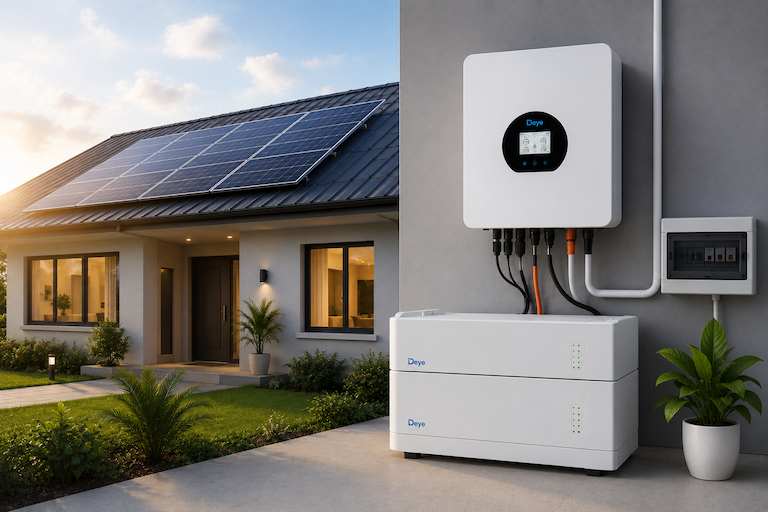
One of the biggest mistakes homeowners make when investing in an inverter system is choosing the wrong size.
Some buy an inverter that’s too small, only to discover it can’t power all their appliances. Others buy an oversized system and end up paying for capacity they’ll never use.
The truth is, your inverter is the heart of your backup power system. If it’s not properly sized, your batteries, solar panels, and appliances won’t perform as efficiently as they should.
In this guide, we’ll explain how to size an inverter correctly, avoid expensive mistakes, and choose a system that matches your home’s energy needs.
Why Inverter Sizing Matters
An inverter converts the DC electricity stored in your batteries into the AC electricity your home uses.
Choosing the correct size ensures:
- Stable and reliable power
- Better battery performance
- Reduced risk of system overload
- Room for future expansion
- Longer equipment lifespan
A properly sized inverter doesn’t just improve performance. It also protects your investment.
Step 1: Make a List of Everything You Want to Power
Before choosing an inverter, list every appliance you expect the system to run.
A typical Nigerian home may include:
- Air conditioners (1HP, 1.5HP or 2HP)
- Television
- LED lights
- Ceiling or standing fans
- Refrigerator or freezer
- Water pumping machine
- Microwave
- Blender
- Air fryer
- Laptop and phone chargers
- Internet router
Don’t estimate. Write down the actual appliances you intend to use.
Tip: Think about what will be running at the same time, not just everything you own.
Step 2: Check the Power Rating of Each Appliance
Every electrical appliance has a power rating measured in watts (W).
You can usually find this on:
- The manufacturer’s label
- The product manual
- The product specification sheet
Below are typical power ratings for common household appliances.
| Appliance | Typical Power Consumption |
|---|---|
| LED Bulb | 10–20W |
| Standing/Ceiling Fan | 60–100W |
| Television | 80–150W |
| Refrigerator | 150–300W |
| Microwave | 1,000–1,500W |
| Blender | 500–1,500W |
| 1HP Air Conditioner | 750–1,000W |
| 1.5HP Air Conditioner | 1,200–1,500W |
| 2HP Air Conditioner | 1,800–2,200W |
| Water Pump | 750–1,500W |
These figures are approximate. Always use your appliance’s actual rating whenever possible.
Step 3: Calculate Your Total Load
Once you’ve identified the appliances you want to power, add their wattages together.
Example
| Appliance | Power |
|---|---|
| 1 × 1.5HP Air Conditioner | 1,300W |
| Refrigerator | 200W |
| 2 TVs | 200W |
| 10 LED Lights | 150W |
| 2 Fans | 120W |
Total Load
1,970 Watts
This represents the approximate amount of power your inverter must supply when these appliances are operating simultaneously.
Step 4: Add a Safety Margin
This is one step many installers overlook.
Never choose an inverter with a capacity exactly equal to your calculated load.
Why?
Because some appliances, especially air conditioners and water pumps, require a much higher amount of power for a few seconds when they start.
Your household may also grow over time as you add new appliances.
A good practice is to add 30% to 40% extra capacity.
Example
Total Load:
1,970W
Add a 40% safety margin:
1,970 × 1.4 = 2,758W
This gives your inverter enough headroom to operate efficiently without being pushed to its limits.
Step 5: Choose the Right Inverter Size
Once you’ve calculated your required capacity, choose the nearest inverter size above your load.
As a general guide:
| Total Load | Recommended Inverter |
|---|---|
| Up to 2,000W | 3kVA |
| 2,000W – 4,000W | 5kVA |
| 4,000W – 7,000W | 8kVA |
| Above 7,000W | 10kVA or larger |
Using our earlier example, a calculated requirement of approximately 2,758W makes a 5kVA hybrid inverter the most suitable choice.
Selecting the next size up also gives you flexibility if your electricity needs increase later.
Common Mistakes to Avoid
Many inverter systems fail to perform well because they were poorly designed from the beginning.
Avoid these common mistakes:
- Choosing an inverter based only on price.
- Ignoring the startup surge of air conditioners and water pumps.
- Underestimating future electricity needs.
- Mixing incompatible batteries and inverters.
- Hiring unqualified installers who estimate rather than calculate.
Remember, even the best batteries and solar panels cannot compensate for an incorrectly sized inverter.
The Inverter Is Only One Part of the System
Your inverter is just one component of a complete backup power solution.
Each part plays a different role.
Battery
Determines how long your appliances can run during a power outage.
Solar Panels
Determine how quickly your batteries recharge using sunlight.
Inverter
Determines what appliances your system can safely power at the same time.
For the best results, all three components should be properly matched.
Is a Bigger Inverter Always Better?
Not necessarily.
While choosing a slightly larger inverter provides room for expansion, buying a system that is far larger than your actual requirements can increase your upfront costs unnecessarily.
The goal isn’t to buy the biggest inverter available.
The goal is to buy the right inverter for your specific energy needs.
Final Thoughts
Choosing the correct inverter size isn’t about guesswork or copying your neighbour’s setup.
Every home is different.
A professionally sized inverter system provides:
- Reliable power during outages
- Improved battery lifespan
- Better system efficiency
- Lower long-term operating costs
- Peace of mind
Investing a little time in proper planning today can save you significant money and frustration in the future.
Need Help Choosing the Right Inverter?
At MyPlanet Energy, we don’t recommend inverter sizes based on assumptions.
We assess your appliances, calculate your actual power requirements, and design a system tailored to your home or business.
Whether you’re installing an inverter for the first time or upgrading an existing setup, our team is ready to help you make the right decision.